
ROOT CANAL THERAPY · TIJUANA, MEXICO
Preserve Your Natural Tooth With Root Canal Therapy
Root canal treatment is designed to preserve a natural tooth affected by deep decay, trauma, infection or irreversible inflammation of the dental pulp.
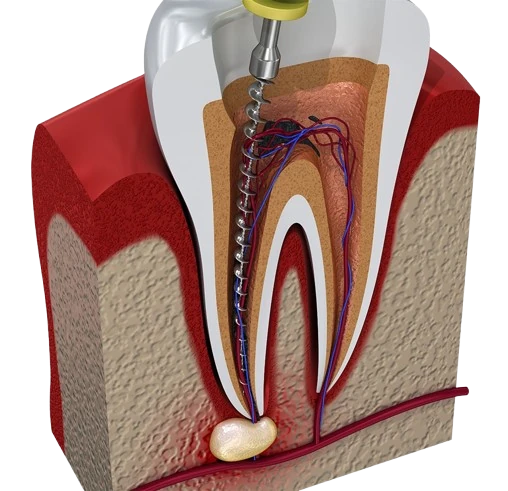
ENDODONTIC TREATMENT
What Is Root Canal Therapy?
Root canal therapy is an endodontic treatment used when the soft tissue inside a tooth becomes severely inflamed, infected or necrotic.
The goal is to remove diseased tissue from inside the tooth, clean and disinfect the root canal system, seal the internal space and preserve the tooth when it remains restorable.
Saving the natural tooth can help maintain chewing function and continuity within the dental arch.
Make your Appointment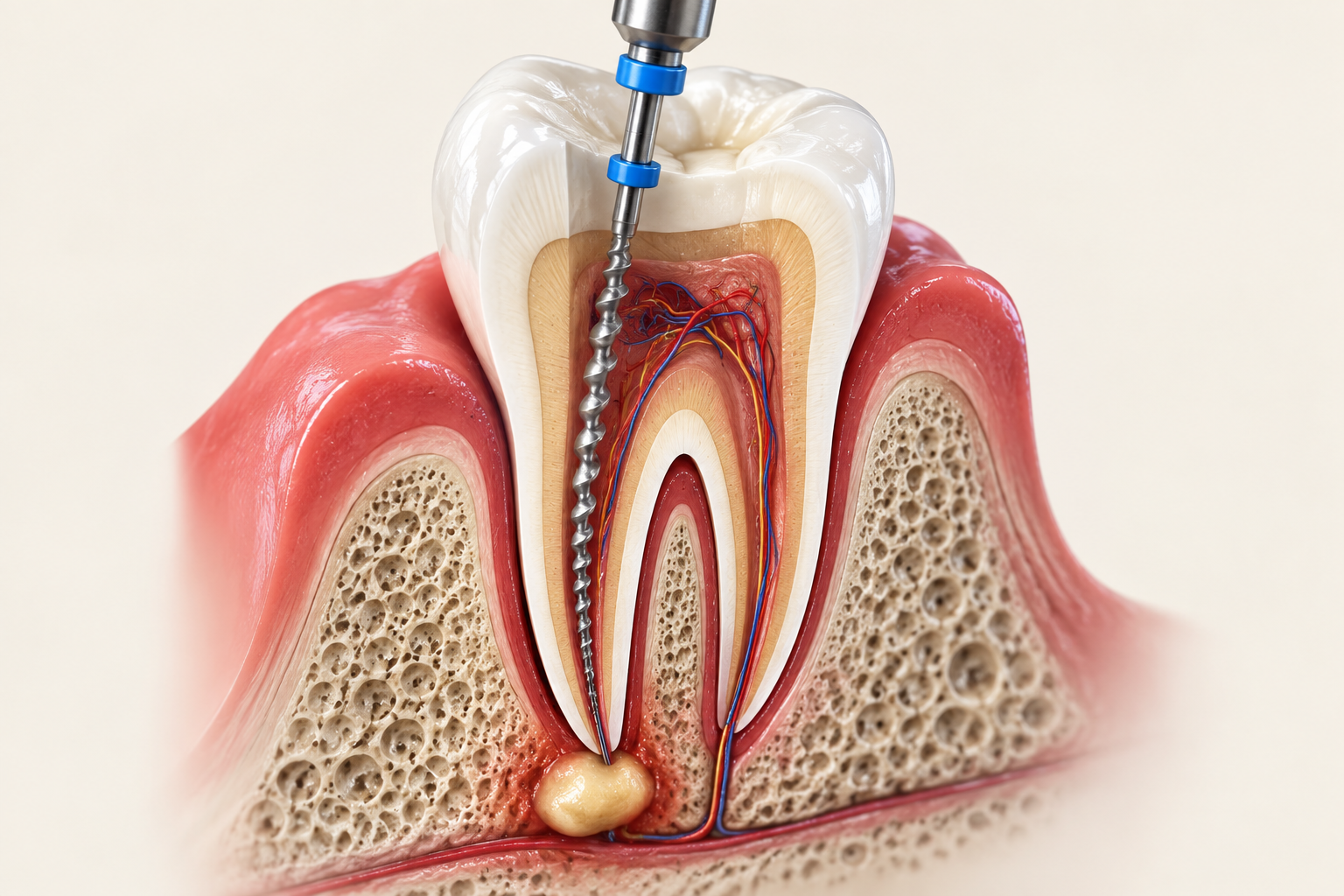
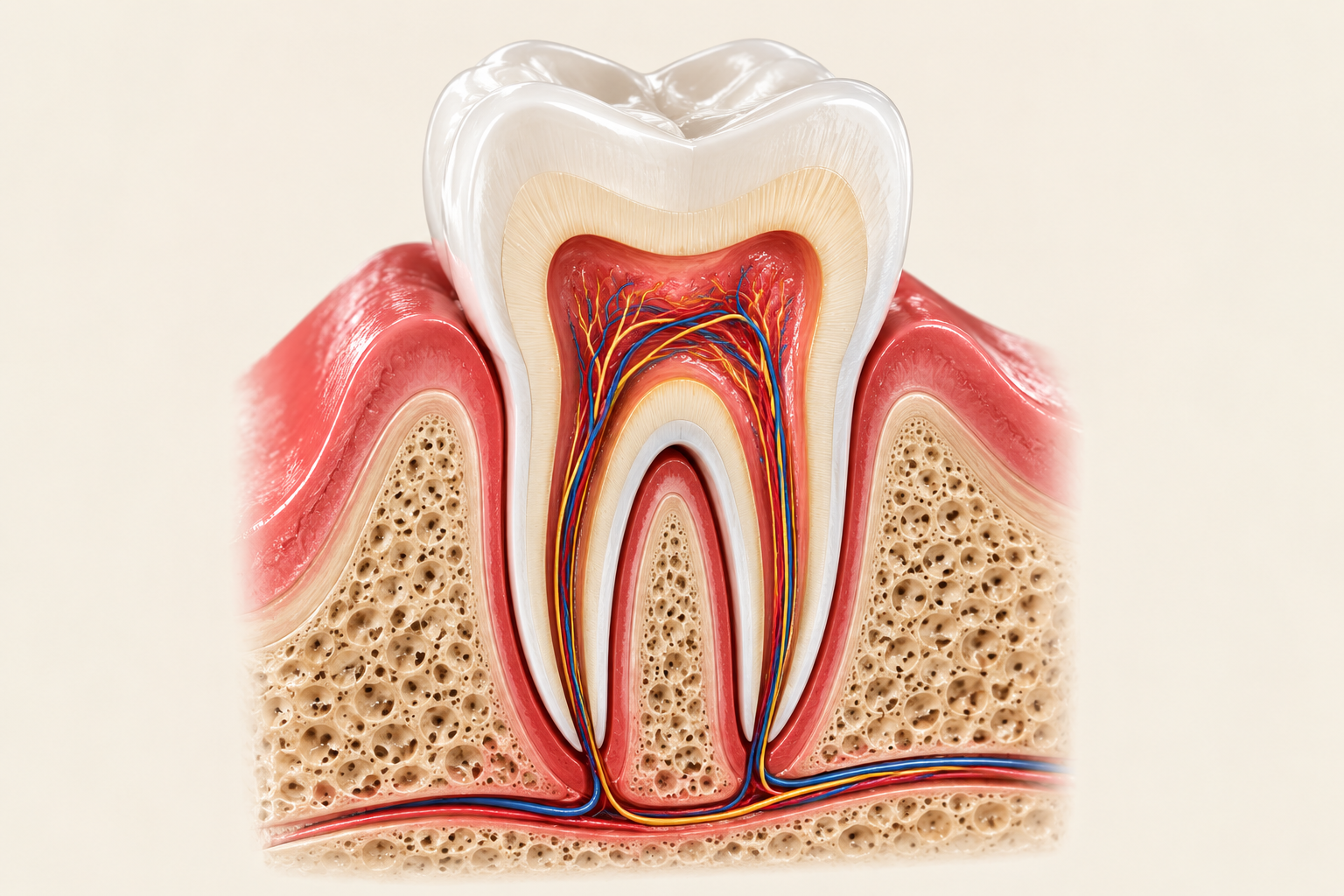
INSIDE THE TOOTH
What Is Dental Pulp?
Dental pulp is the soft tissue located inside the tooth and root canals. It contains nerves, blood vessels and connective tissue.
When the pulp becomes severely inflamed or infected, symptoms may include persistent pain, sensitivity, swelling or infection around the root.
Remove infected or necrotic tissue
Reduce bacterial contamination inside the tooth
Preserve the natural tooth when it can be restored
WHEN ROOT CANAL THERAPY MAY BE NEEDED
Signs That the Dental Pulp May Be Compromised
Symptoms alone do not confirm the diagnosis. Clinical testing and dental imaging are used to determine whether the pulp is affected.
Deep Tooth Decay
Advanced decay may reach the dental pulp and cause inflammation or infection.
Cracks or Fractures
A fracture may expose or damage the internal pulp tissue.
Dental Trauma
Impact injuries may compromise pulp health even when the tooth appears intact externally.
Persistent Tooth Pain
Severe or prolonged discomfort may be associated with pulpal inflammation.
Swelling or Abscess
Infection around the root may produce swelling, tenderness or drainage.
Prolonged Sensitivity
Persistent sensitivity to temperature may require further endodontic evaluation.
ROOT CANAL PROCEDURE
Step-by-Step Treatment Overview
Diagnosis & Imaging
Clinical testing and dental imaging help evaluate the pulp, roots and surrounding structures.
Isolation & Access
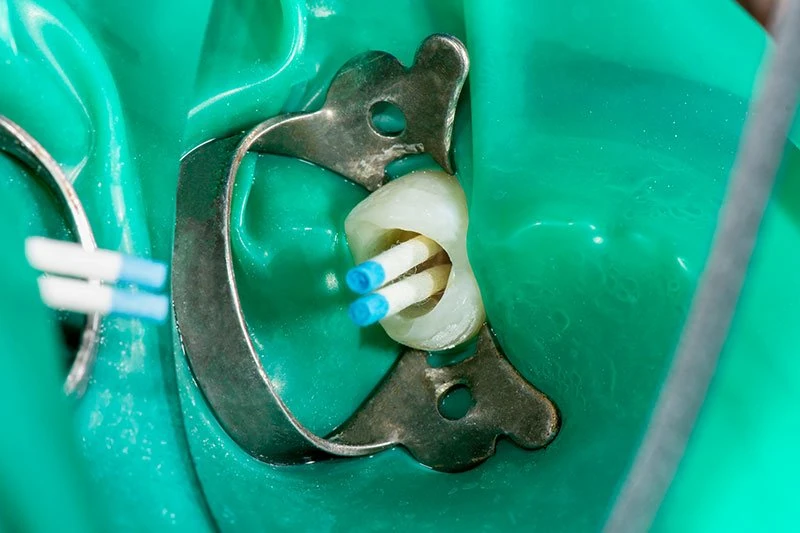
The tooth is isolated and an opening is created to access the internal pulp chamber and root canals.
Pulp Removal
Inflamed, infected or necrotic pulp tissue is removed from the canal system.
Cleaning & Disinfection
The root canals are shaped, cleaned and disinfected to reduce bacteria and debris.
Canal Filling
The prepared canals are sealed with a biocompatible filling material.
Final Restoration
The tooth is restored with a definitive restoration selected according to remaining tooth structure and function.
ENDODONTIC TREATMENT
See the Root Canal Treatment Process
PRESERVE OR REPLACE?
Root Canal Therapy vs. Tooth Extraction
The appropriate treatment depends on whether the natural tooth can be predictably restored.
Root Canal Therapy
- Preserves the natural tooth
- Maintains continuity of the dental arch
- Avoids immediate tooth replacement
- Usually requires a definitive restoration afterward
Extraction
- Removes a tooth that cannot be predictably restored
- Leaves a missing-tooth space
- May require future replacement with an implant or bridge
- Requires separate planning for tooth replacement
WHAT TO EXPECT
Before, During and After Treatment
Diagnosis & Planning
Clinical examination, dental imaging and pulpal testing help determine whether root canal therapy is appropriate.
Cleaning & Sealing
The internal canal system is accessed, cleaned, disinfected and sealed according to the treatment plan.
Restoration & Follow-Up
The tooth may need a crown or another definitive restoration to protect remaining structure and restore function.
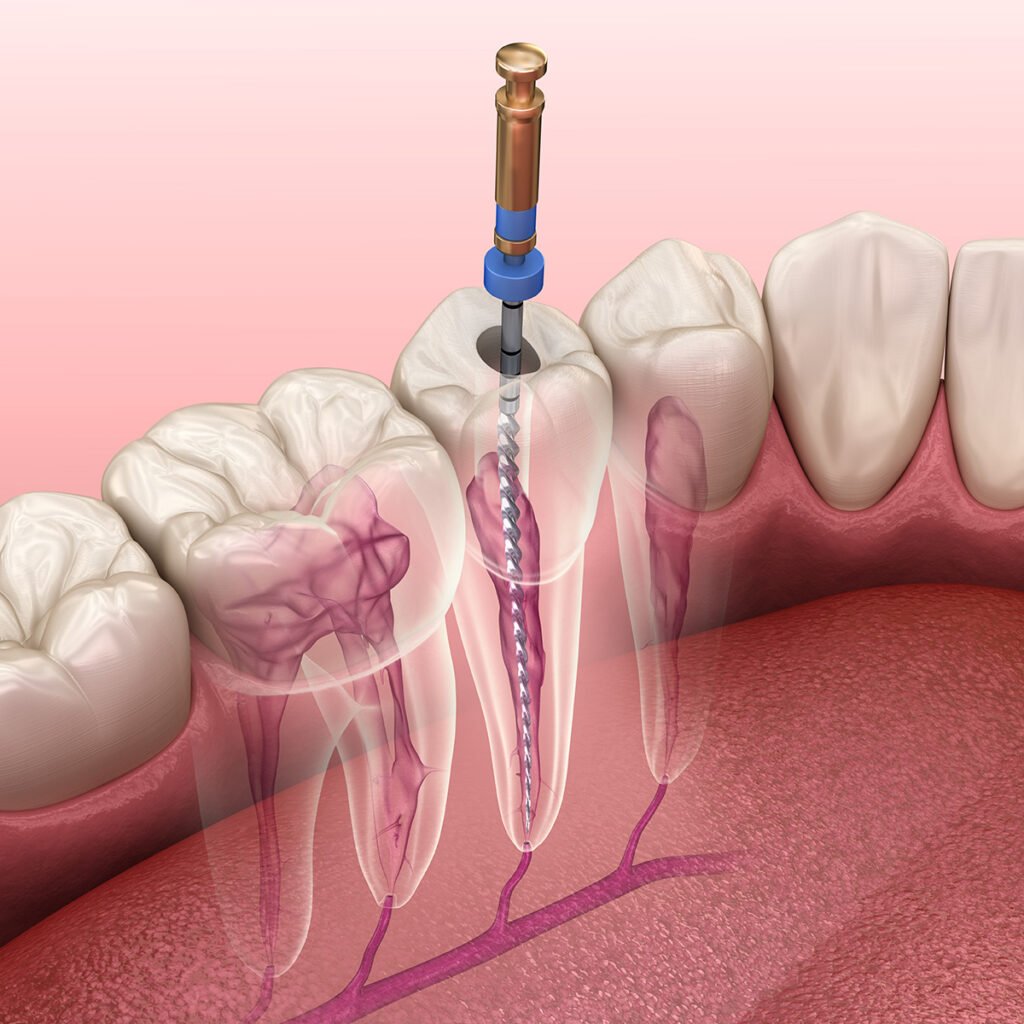
ROOT CANAL MATERIALS
Materials Used During Treatment
Gutta-Percha
A biocompatible material commonly used to fill and seal the cleaned root canal space.
Root Canal Sealers
Materials used with the canal filling to help seal small spaces within the root canal system.
Temporary Restorations
Temporary materials may protect the tooth between treatment stages when required.
Final Crown or Restoration
A definitive restoration may be recommended to restore strength, function and protection.
POSSIBLE COMPLICATIONS
Why Diagnosis and Follow-Up Matter
Root canal therapy is intended to preserve a tooth, but treatment outcomes can be affected by anatomy, infection, cracks and restorative factors.
Complex or missed canal anatomy
Persistent or recurrent infection
Instrument complications
Post-treatment tenderness or flare-up
Root fracture
Restorative failure or leakage
LONG-TERM CARE
Protecting a Root Canal-Treated Tooth
Long-term success depends on both the endodontic treatment and the quality of the final restoration.
AFTER ROOT CANAL THERAPY
Post-Treatment Recommendations
Protect the Tooth
Avoid heavy chewing on the treated tooth until the definitive restoration is completed when advised.
Keep Follow-Up Appointments
Follow-up allows the tooth and surrounding tissues to be evaluated after treatment.
Maintain Oral Hygiene
Continue brushing, flossing and professional dental care to protect the treated tooth and surrounding teeth.
QUESTIONS PATIENTS ASK
Root Canal Treatment: Answers to Common Concerns
01Is root canal treatment painful?
+
Is root canal treatment painful?
Root canal therapy is generally performed with local anesthesia. Some tenderness may occur after treatment, but the goal of the procedure is to remove inflamed or infected tissue and preserve the tooth.
02Can I drive after a root canal?
+
Can I drive after a root canal?
In many cases, yes, when treatment is performed with local anesthesia only. If sedation is used, transportation arrangements may be necessary.
03Will I need a crown afterward?
+
Will I need a crown afterward?
Many root canal-treated posterior teeth benefit from a definitive crown or other strong restoration. The final recommendation depends on how much healthy tooth structure remains.
04Does every toothache require a root canal?
+
Does every toothache require a root canal?
No. Tooth pain can have several causes, so clinical testing and dental imaging are important before determining whether root canal therapy is necessary.
05Can a badly damaged tooth still be saved?
+
Can a badly damaged tooth still be saved?
Only if the tooth remains restorable and has adequate structural and periodontal support. If prognosis is poor, extraction and replacement options may be discussed.
06How long can a root canal-treated tooth last?
+
How long can a root canal-treated tooth last?
Longevity depends on the quality of the treatment, the final restoration, oral hygiene, bite forces and regular dental maintenance.
SAVE YOUR NATURAL TOOTH WHEN POSSIBLE
Start With a Proper Diagnosis
Tooth pain does not automatically mean you need a root canal. A clinical evaluation and imaging can help determine the cause and whether the tooth can be predictably preserved.